RFID mould tracking links a mould identifier to storage, installation and maintenance events. Define whether you need the whole tool, an insert or an interchangeable assembly identified, then trial the tag on the actual tooling and at the intended read points.
Speak directly with Oxford Traceability about RFID identification of production moulds.
Quick answer
How can we identify moulds and record their use across production?
Map mould storage, installation, removal, maintenance and repair events. Identify tag positions that can be assessed under the mould’s actual handling and process conditions. Trial reading at the relevant machines and locations, with controls for tool changes, unreadable identifiers and the association between mould, job and production record.
Application decisions
Keep tool identity and production history connected
Decision 1
Define the tool hierarchy
Record the mould, its relevant inserts or interchangeable parts and the identifiers already in use. Decide which changes create a new configuration record. Identifying the outer tool does not by itself prove which insert or cavity configuration was fitted for a production run.
Decision 2
Assess the real mounting conditions
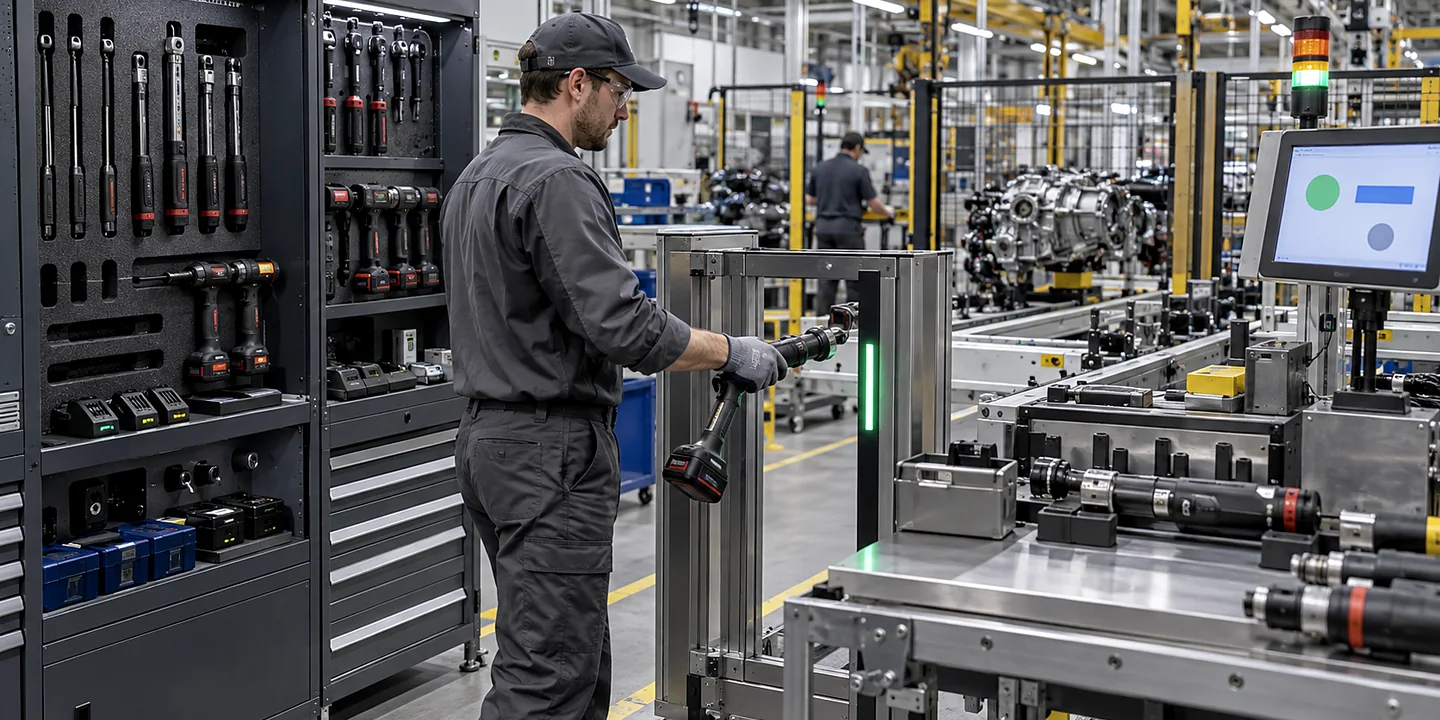
Provide tool material, available mounting space and exposure to heat, cleaning, impact or handling. Review any proposed attachment with the tool owner. A tag and its fixing must be assessed without compromising the mould’s function or the maintenance process.
Decision 3
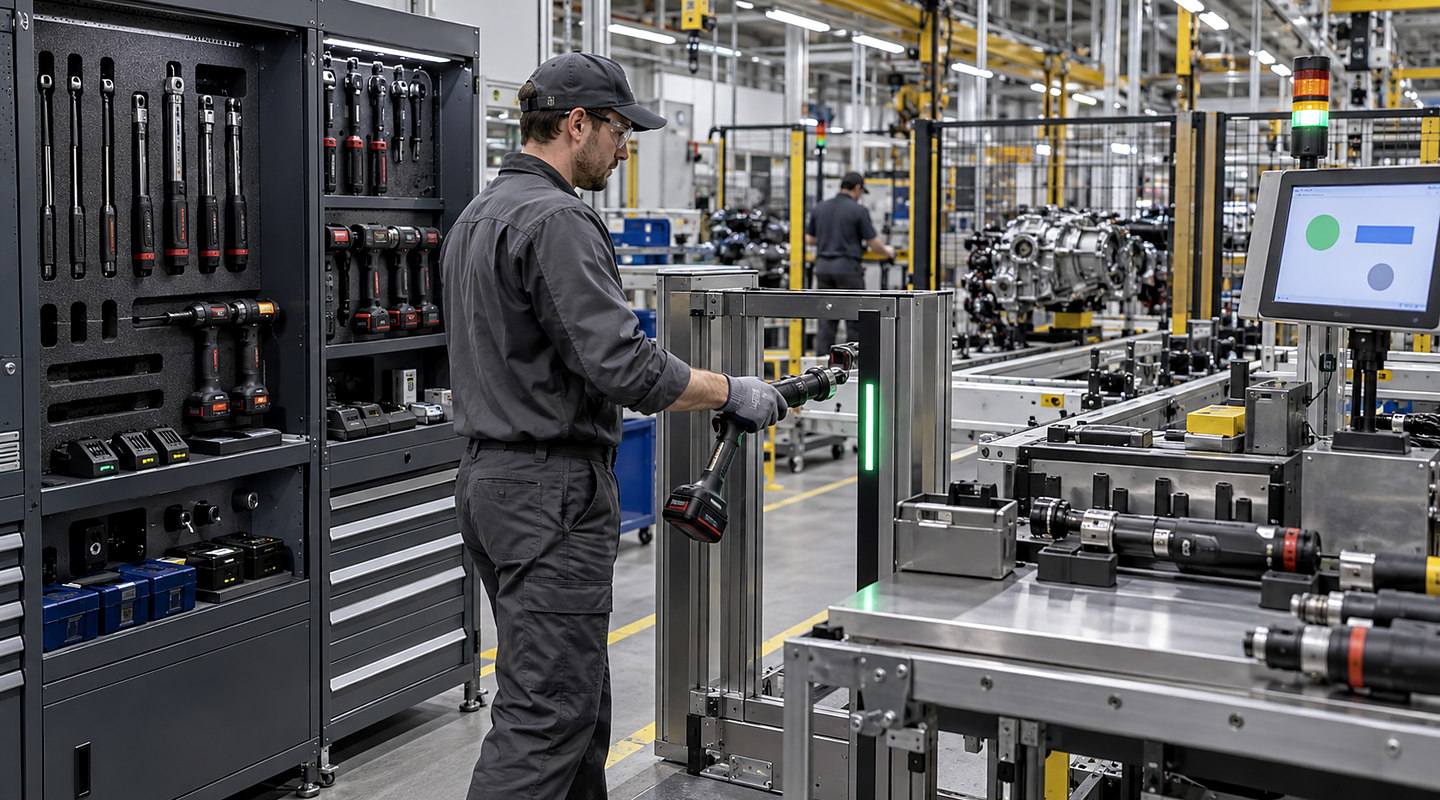
Separate storage and machine read points
List the events needed at stores, transport and the production machine. Define how a read is associated with a particular location. Include other tagged tools nearby so a record does not falsely place the adjacent mould in the machine.
Decision 4
Link installation to the production job
Specify how the installed mould is checked against the authorised job or recipe. Agree the response to an unexpected identity, unreadable tag or incomplete changeover. A tag read should support a defined setup confirmation, not merely populate a location screen.
Decision 5
Define the source of usage history
If cycles or operating hours are required, identify the machine data that supplies them and when counting starts and stops. Keep the usage record attached to the correct installed tool. RFID identifies the mould; it does not independently measure its production cycles.
Decision 6
Preserve maintenance and replacement history
Record inspection, repair and tag replacement without discarding earlier tool events. Define who may return a tool to available status. Use the mould tracking checklist to align identity, machine data and maintenance responsibilities.
Applications
Follow the mould through stores and production
Tool identification should support the events you need at storage, installation and maintenance. Keep the machine association and source of usage counts explicit when connecting those events to existing records.
Keep the mould configuration attached to the production run
An RFID mould identity can identify the tool body while leaving its fitted inserts or configuration unresolved. Decide which tool relationships the production record must preserve, then test installation, removal, maintenance and return with that hierarchy in place.
Describe the tool configuration that matters
List the mould body, relevant inserts and interchangeable elements that affect the recorded product or process. Decide which identifiers are captured directly and which are confirmed under an approved setup procedure. Do not infer the fitted configuration solely from the outer mould identity if components can change independently.
Bind installation to the intended machine and job
Define the evidence that a particular tool is installed rather than waiting nearby. Associate the accepted installation with the machine and released production job. Challenge the wrong job, an adjacent tagged tool and an aborted change so the system does not begin a use record too early.
Record usage with its source and limits
Specify whether usage comes from machine cycles, completed parts, time or an operator entry. Keep counter resets and configuration changes visible. A tool-read timestamp does not establish how many production cycles occurred, and a common mould-body counter may not describe the history of every replaceable insert.
Close maintenance and return under control
Preserve removal, maintenance status and authorised return-to-service decisions as separate events. If a tag is replaced, keep the link to the same tool history. Proposed mounting and later servicing should be reviewed with the tool owner so identification equipment does not interfere with function or access.
A worked planning example
For illustration, mould M returns from maintenance with insert I2 replacing I1. The next production run should retain M’s continuity while recording the changed configuration and approval. A backward query for the previous run should still return I1, rather than inheriting the tool’s current configuration retrospectively.
Acceptance questions to resolve
Does the record distinguish tool body and relevant insert identities?
What proves installation on the correct machine and job?
Are usage counters attributed to the correct configuration and source?
Can previous runs retain their original configuration after maintenance changes?
Read performance and unwanted reads must be proved in the actual material, orientation and radio environment.
Mark, label, tag and reader performance depends on the real substrate and environment.
A readable code does not prove that its encoded data is correct or reconciled.
Your final solution for RFID identification of production moulds must reflect the law, current standards and site-specific risks that apply to your installation.